Olimpia Zagnoli: Making the World More Colourful

Olimpia Zagnoli uses bold, playful colour to convey emotion, celebrate diversity, and inspire through joyful, intuitive illustration and subtle activism.

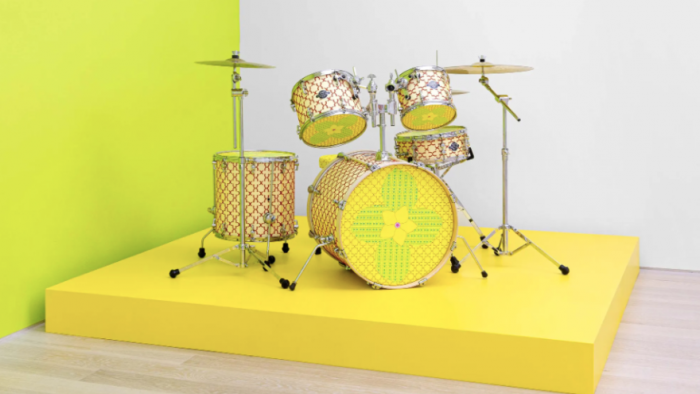
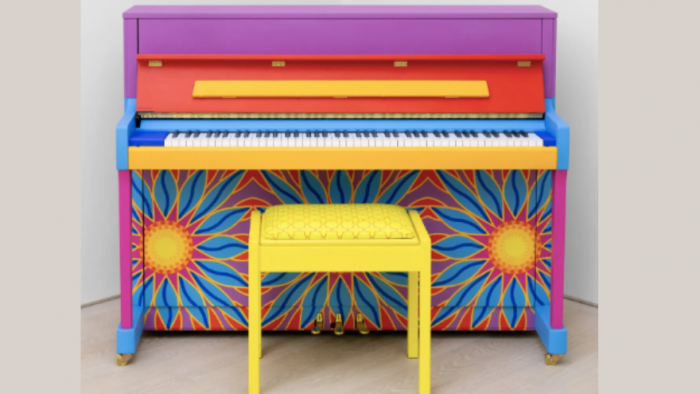
Italian illustrator Olimpia Zagnoli’s Design Indaba talk brought a joyful sense of optimism to the stage, using colour, playfulness and intuition as tools for both expression and subtle activism. Known for her bold, graphic style and vibrant palettes, Zagnoli’s work stands out for its ability to communicate complex ideas through simplicity and joy.

Zagnoli’s Design Indaba talk centred on the emotional power of colour as a language. Zagnoli described how hues can shift atmosphere, evoke feeling and shape perception. Her use of colour is often guided by instinct rather than rigid rules, this intuitive approach allows her illustrations to feel human and personal.

Beneath the surface of her cheerful aesthetic lies a more deliberate message,  As she shared during the talk,  her work carries a form of “quiet activism” using design to engage with themes of identity, representation and inclusivity. Zagnoli’s illustrations whether for global brands or cultural platforms often celebrate diversity and challenge normative narratives, proving that lightness and depth can coexist.

Influenced by movements such as Art Deco and Futurism, as well as everyday observations, Zagnoli continues to expand her practice beyond illustration into objects, installations and spatial design. Her evolution as an evolution reflects how images move beyond the page to interact with people and environments, reminding the audience that creativity need not be heavy to be meaningful.


Watch the full Design Indaba talk here.

Ibrahim Mahama: Monumentality

A rethinking of monumentality, using reclaimed materials to reveal hidden histories of labour, trade and colonialism through large-scale installations.

At Design Indaba’s 25th anniversary, renowned Ghanaian artist, Ibrahim Mahama presented his powerful body of work that redefines monumentality. Known for his large-scale installations, Mahama transforms buildings and public spaces using reclaimed materials, most notably jute sacks once used in Ghana’s cocoa trade.

Jute sacks, while seemingly ordinary, carries complex histories. Having travelled across borders and passed through countless hands, the sacks embody global systems of trade, labour and exchange. By stitching them together and draping them over architectural structures, Mahama creates works that are both visually striking and deeply political confronting the legacies of colonialism and capitalism.

Mahama’s conveys the idea that materials hold memory, sharing with audiences how the wear, stains and markings on each sack become a living archive of human activity, reflecting both the promises and failures embedded in Ghana’s post-independence history. Mahama provides insight into his installations, sharing that beyond the scale and spectacle, his work  reveals the invisible systems that shape everyday life.

Mahama also emphasised the role of community in his practice. His works are often produced through collective labour and installed in public or socially significant spaces, inviting dialogue and participation. For him, art extends beyond objects it becomes a platform for rethinking institutions, histories, and futures.


Watch the full Design Indaba talk here.

Honey & Bunny: Playing with their food

A playful, provocative performance reframing food as design, challenging how and why we eat while exposing the systems shaping everyday consumption.

Sonja Stummerer and Martin Hablesreiter,  delivered a provocative and playful performance that reframed food as one of the most overlooked yet powerful design disciplines. The duo, known as Honey & Bunny, have built their practice around interrogating the systems, practices and tools that shape how we eat.

Trained as architects, they shifted their focus to food design, asking a deceptively simple question: who designs what is on the plate? From this starting point, their work has evolved into a series of “eat art” performances that challenge the tools, environments and behaviours associated with consumption.

At Design Indaba, this approach took the form of a playful performance that disrupted familiar dining conventions. Through unusual setups they invited audiences to question why we eat the way we do and how these habits reinforce social structures and cultural norms.

Their work is intentionally eccentric, often humorous, and occasionally uncomfortable. Diners might eat kneeling, interact with suspended tables or encounter objects that blur the line between tool and provocation. These moments are not spectacle for its own sake but a method of creating awareness encouraging people to reconsider everything from the sustainability to the hierarchy embedded in everyday consumption.

Honey & Bunny position food as a designed system, a playful and provocative reminder that even the most routine human behaviours are constructed  and therefore can be redesigned.


Watch the full Design Indaba talk here.

Wasteland Nomad

Designer Yizhuo Guo’s Wasteland Nomad project aids ecological restoration
Yizhuo Guo - Wasteland Nomad

Designer Yizhuo Guo has developed a bionic rolling structure that disperses seeds across degraded landscapes as it travels with the wind. The concept, Wasteland Nomad, functions as a “living system,” taking cues from nature’s own strategies for regeneration. Lightweight and mobile, the spherical form moves autonomously across terrain, scattering seeds into the soil and enabling vegetation to re-establish itself over time. The system removes the reliance on heavy infrastructure or labour-intensive planting to revive the land by introducing a self-distributing ecological mechanism powered by wind and natural forces.

The rolling device becomes both carrier and catalyst, embedding seeds into ecosystems while adapting to changing conditions. The design functions as a lightweight spherical framework composed of interwoven, flexible arms. Embedded within the structure are seed capsules and soil nutrients, which are gradually released as the object rolls across the landscape. When the “ball” enters a moist environment, it’s elements expand, increasing contact with the ground and biochar and seeds are released into the soil precisely when conditions are most favourable for germination. Its open structure also enables it to adapt to uneven terrain, maintaining movement across varied landscapes without external energy input. Over time, multiple units can disperse seeds across large areas, creating a distributed and scalable method of ecological recovery.

Untitled

A creative app for music production

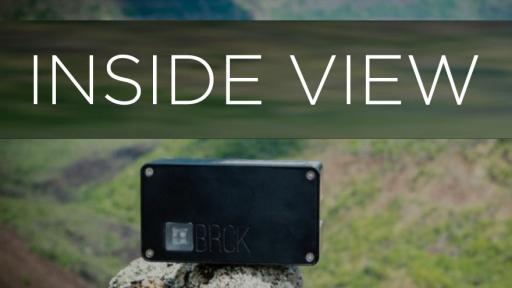
Untitled, a breakthrough a music app, designed by Dan Lilienthaland José Chayetfor the process of creativity is gaining momentum amongst musicians. Built as a space for unreleased and work-in-progress tracks, Untitled reframes how music is produced, organised and shared.

The ingenuity of the app lies in its functionality as a creative workflow tool disguised as a music player. Users can upload tracks from multiple sources, organise them into projects and folders and sync seamlessly across devices.  Unlike traditional platforms, it allows artists to iterate, updating versions, adding notes and collaborating in real time.

integrates features typically scattered across tools like file storage, playback, editing and collaboration into one cohesive interface. With offline functionality, lossless audio and secure sharing, it prioritises both usability and trust, addressing long-standing friction in creative workflows.

More than a product, Untitled represents a shift in design philosophy: from platforms that distribute culture to tools that help produce it. By focusing on iteration, privacy and collaboration, it empowers musicians to create freely before going public.

Robert Wong: Designing for Humanity’s futures

A powerful reflection on design in a complex world, urging creatives to shape human-centred futures through empathy, curiosity and meaningful questions.

At Design Indaba’s 25th anniversary, designer and creative leader Robert Wong reflected on what it means to create in an age defined by complexity and constant change. As Chief Creative Officer of Google Creative Lab, Wong’s work sits at the intersection of technology, storytelling and human experience, his talk unpacked how design can move beyond problem-solving becoming a tool for creating meaning.

Wong emphasises that designers are no longer simply shaping objects or interfaces but are creating systems of interaction that influence how people understand the world and as a result must remain deeply human. While digital tools and platforms continue to expand what is possible, Wong believes the role of the designer is to anchor innovation in empathy, curiosity and cultural awareness. Sharing his journey at Google Creative Lab, Robert Wong suggests his most impactful work, came from asking better questions rather than rushing toward answers. In a world increasingly defined by complexity, Wong’s message is clear: the designer’s role is both sense-making and creating better futures.


Watch the full Design Indaba talk here.


Vukheta Mukhari: The World’s First Bio-Brick

A groundbreaking rethink of waste, transforming human urine into sustainable building material while challenging how we define value and innovation

Vukheta Mukhari’s shares a radical rethink of waste materials and the future of sustainable construction. A Design Indaba Global Graduate and civil engineer from the University of Cape Town, Mukhari’s presented the ground-breaking bio-brick project he developed with his research team at the university. The building material made from human urine through a natural process involving bacteria was a world first, making a powerful case for biomimicry and circular thinking.

Mukhari’s talk challenges audiences to reconsider the way modern society defines value. In nature, he argued, there is no such thing as waste, only resources waiting to be transformed. Drawing on this principle, he showed how urine, one of the most overlooked by-products of daily life, can be repurposed into a construction material with the potential to reduce environmental strain in the building industry. Mukhari’s talk is a call to design with humility and imagination.


Watch the full Design Indaba talk here.


Debbie Millman: A Life with Meaning

A reflective talk on creativity, identity and resilience, urging designers to embrace imperfection.

Designer, writer and educator Debbie Millman shared personal and reflective talk on creativity, identity and the courage it takes to build a meaningful life. Known for her work in branding and as host of the podcast Design Matters, Millman shifted the focus away from traditional notions of success and toward the often messy, nonlinear journey of becoming.

Millman reflected on the idea that creative fulfilment is not immediate but rather is something that unfolds over time, shaped by persistence and reinvention. Millman spoke candidly about her own path, describing years of rejection and uncertainty before finding her voice, reminding audiences that late blooming is not failure, but part of the process.

Millman emphasises the importance of self-awareness in design, proposing that the most powerful creative work emerges when individuals align what they do with who they are. Millman advocates for designers to cultivate authenticity, resilience and emotional honesty in both their work and personal lives leaving audiences with a powerful sentiment that a well designed life is not about perfection, but about intention and the courage to keep evolving.


Watch the full Design Indaba talk here.


Paul Cocksedge: Power of Wonder

Paul Cocksedge explores how curiosity and experimentation transform everyday phenomena into immersive, wonder-driven design experiences.

At the 25th Edition of Design Indaba, British designer Paul Cocksedge’s delivered a talk advocating for design driven by curiosity, careful observation and wonder. Known for transforming everyday phenomena into poetic installations, Cocksedge described his practice as making invisible forces such as gravity, magnetism, light and sound visible and experiential.

Rather than beginning with fixed plans or digital simulations, Cocksedge emphasises hands-on experimentation. In his studio, quick physical prototypes allow materials and natural behaviours to guide outcomes, often embracing accidents as part of the creative process. This approach, he believes keeps design open to surprise and discovery. Cocksedge also underscores the importance of working with natural forces rather than against them, suggesting that impactful design can emerge from sensitivity rather than resource intensity.

A central theme of this work is the social power of wonder. His large-scale public works invite people to pause, interact and share moments of curiosity in everyday spaces. By manipulating light, reflection and movement, he transforms ordinary environments into immersive experiences that feel both minimal and magical.

Watch the full Design Indaba talk here.


Blue Highways

New York City has launched Blue Highways, an initiative to rethink urban freight by using waterways to move goods more efficiently.

The programme sees the city partnering with innovative freight partners like DutchX, to shift freight transport from congested streets to the city’s extensive network of waterways. DutchX, a logistics company pioneering a hybrid delivery model that combines water-based freight with zero-emission last-mile transport. Goods are transported by barge between waterfront hubs, then transferred onto electric cargo bikes for final delivery, a model that can cut delivery times while eliminating the need for trucks in city centres.

This approach reflects a deeper design shift: thinking of the city not as a fixed network of roads, but as a layered ecosystem of movement. By reassigning the “middle mile” to water and the “last mile” to micro-mobility, Blue Highways reduces congestion, improves air quality. This is not simply an infrastructure upgrade; it is a design-led reconfiguration of systems. By mapping logistics onto rivers instead of highways, Blue Highways reframes the city as a multi-layered network where land and water operate in tandem. The approach reduces congestion, lowers emissions and introduces resilience into a system currently over whelmed by the city’s congestion. Blue Highways demonstrates how design thinking at a systems levelcan unlock sustainable futures by reimagining existing infrastructure with new technology. In doing so, it offers a compelling blueprint for cities worldwide, sometimes, better design doesn’t mean building more but instead reviving unused infrastructure.

Subscribe to Design Indaba RSS