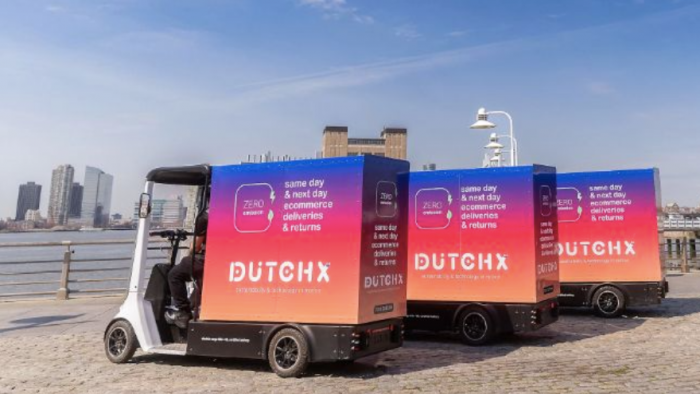
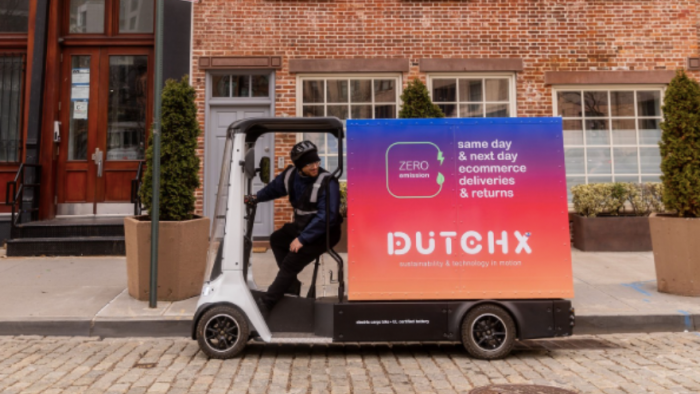
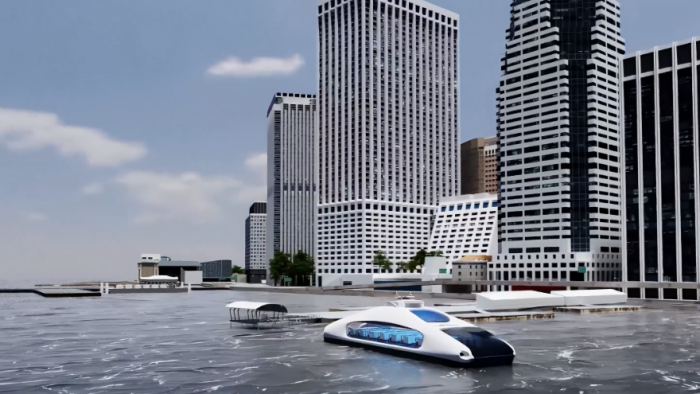
The programme sees the city partnering with innovative freight partners like DutchX, to shift freight transport from congested streets to the city’s extensive network of waterways. DutchX, a logistics company pioneering a hybrid delivery model that combines water-based freight with zero-emission last-mile transport. Goods are transported by barge between waterfront hubs, then transferred onto electric cargo bikes for final delivery, a model that can cut delivery times while eliminating the need for trucks in city centres.
This approach reflects a deeper design shift: thinking of the city not as a fixed network of roads, but as a layered ecosystem of movement. By reassigning the “middle mile” to water and the “last mile” to micro-mobility, Blue Highways reduces congestion, improves air quality. This is not simply an infrastructure upgrade; it is a design-led reconfiguration of systems. By mapping logistics onto rivers instead of highways, Blue Highways reframes the city as a multi-layered network where land and water operate in tandem. The approach reduces congestion, lowers emissions and introduces resilience into a system currently over whelmed by the city’s congestion. Blue Highways demonstrates how design thinking at a systems levelcan unlock sustainable futures by reimagining existing infrastructure with new technology. In doing so, it offers a compelling blueprint for cities worldwide, sometimes, better design doesn’t mean building more but instead reviving unused infrastructure.