



"I would sum up my fear about the future in one word: boring. And that's my one fear: that everything has happened; nothing exciting or new or interesting is ever going to happen again ... the future is just going to be a vast, conforming suburb of the soul" JG Ballard.
Shall we be as dystopian as JG Ballard? Shall we say that what will merge or grow from the future will be “boring” or that it will merge into the ultimate social disaggregation?
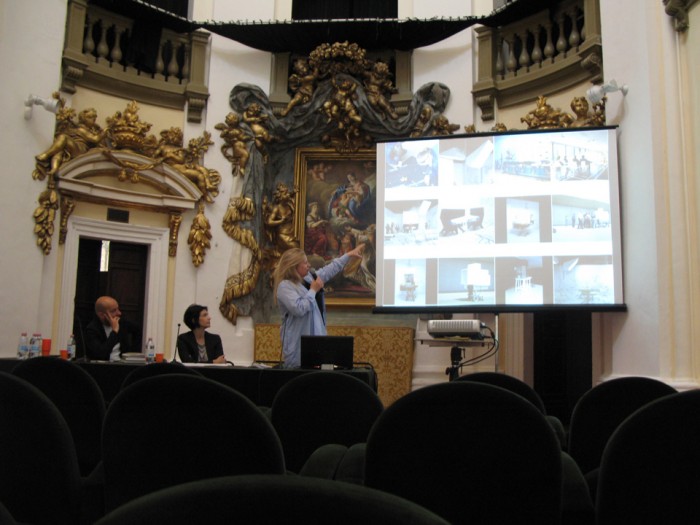
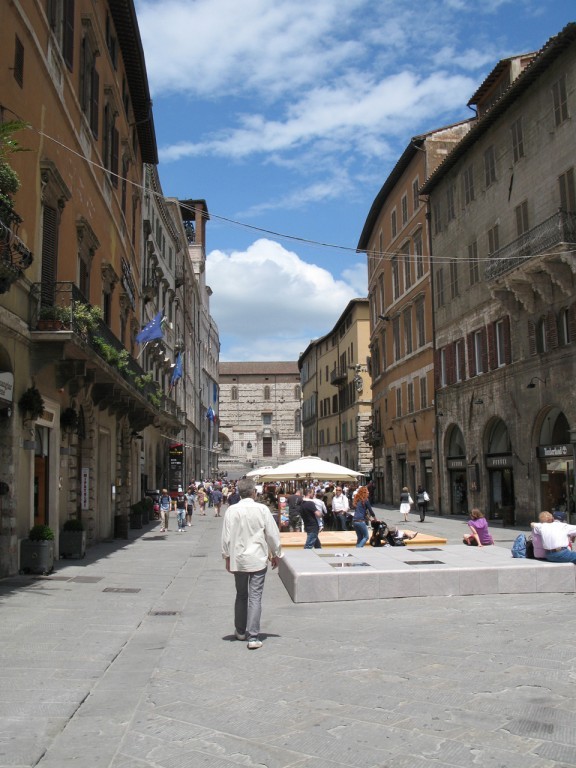
With such a controversial topic “The Anti-City” as titled by Stefano Boeri, editor-in-chief of Abitare, the Festarch festival in Perugia, Italy kicked off yesterday afternoon.
With a packed programme happening all around the city and taking place in 18th- century Commedia Dell’Arte theatres, the festival questions space and power, as well as the interactivity of architecture and the possible experiences we shall have in the close future.
We explored “the world without words” by Jasper Morrison and Makkink & Bey presented their PROOFF series, made of slow cars and the High Worker for another vision of the everyday.
We talked about transparency with Moscow-based architect Yuri Grigoryan and the wood walls of their concept house, laser-cut in shapes with little holes, just like French cheese gruyere.
But we also heard about natural disasters such as the one in Haiti, cities of construction and destruction in Iraq, environmental issues, Moscow, Beijing and its first Design Triennial.
Hard to keep up, isn’t it?
The glory of architecture… or the architecture of consequences?
Some are optimistic, such as Ole Bouman, director of the Netherland Architecture Institute, who started his speech by mentioning the “glory of architecture”. This gave us a unique appreciation of our everyday and in declining so many possible compositions and structures that we can build, DIY, ourselves . He mentioned interactive experiences such as the iPhone app “urban augmented reality” to experience the past, present and future of Rotterdam.
But while saying that architecture is an “achievement”, Bouman raised the urge for an “architecture of consequences”, a reasonable, sustainable answer to the critical human conditions of today.
How to give to architecture a real useful value? What about using vacant spaces? The project called Dutch Atlas of Vacancy presented at the Venice Bienniale in 2010 by Rietveld Landscape proposed a taxonomy of these empty spaces, which should find alternative uses.
Surreal estate: Neo medievalism in architecture
We are living in a “neo-medievalism age”, Mumbai-based architect Matias Echanove told us. Finding his argument in the narrative developed previously by the writer Umberto Eco, he presented us with the “urban jungle of skyline buildings, shopping mall, real castles all in once”.
Everything outside the skyline is the “forest” and “out of control", according to promoters in Mumbai who sell images of modernity through vertical performances symbolised by skyscrapers.
Check out the Skycraper Index, it presents the correlation between the highest tower in a country and the economic crisis following it.
There is no “real value in these constructions”, Echanove said. “It is more about the symbol really, careful to the come back of the Myth of Babel reducing all fantasies into one totalitarianism.”
A real cult of the High Rise such as predicted by JG Ballard, the techno-landscape to come will keep encompassing everything in one.
Comedia Dell’Arte
The Teatro Morlacchi built in the 1781, the Teatro Pavone, the Palzzo dei priori were all scenes for the festival.
This inspires crossovers, as mentioned by Alessandro Mendini: “Architecture is Comedia Dell’Arte, painting, film and stories.”
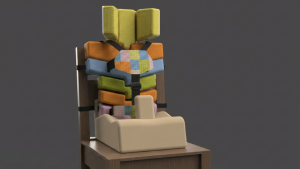
With his Proust chair made of mosaics like a pointillist painting by Georges Seurat, Mendini questioned scale and the plurality of art, design and architecture.
Isolation
Born in Reykjavík, Brynjar Sigurðarson, is young designer to be graduated this year at ECAL. He did a Pecha Kucha presentation of his personal experience of isolation when he travelled to a recluse village in Iceland. “Isolation drives you mad, I lost my hat there and thought for two weeks that a ghost took it.”
“I was on my own”, maybe this is what the Anti-City is? A place where you are simply forced to experience individualism and loneliness?