


First Published in
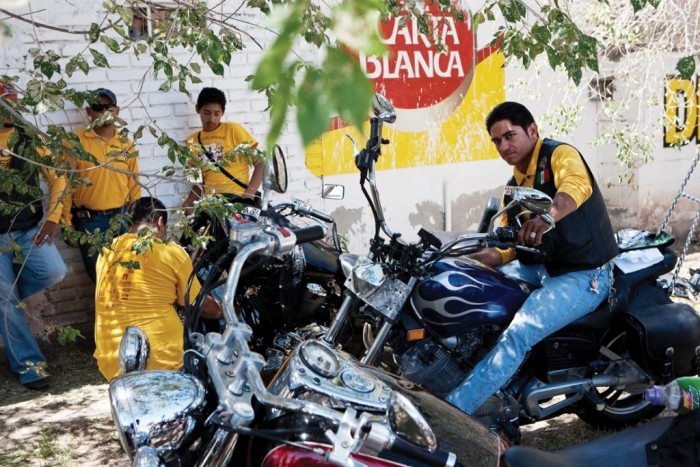
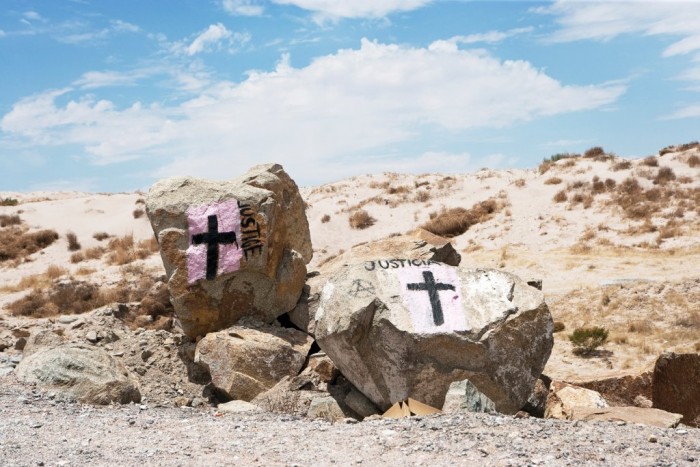
Known as the most violent zone in the world outside of declared war zones, Ciudad Juárez in Mexico counted 3 075 homicides in 2010. Predominantly related to the Mexican Drug War, the primary culprit, the Juárez Cartel, controls one of the main transportation routes for billions of dollars worth of illegal drug shipments annually entering the United States from Mexico.
Lying on the USA-Mexico border, Ciudad Juárez is separated from El Paso in the USA by a fence that runs straight through one of the largest bi-national metropolitan areas in the world. Besides being the largest drug trafficking route in the world, the 3 169 kilometre border is also the most frequently crossed international border in the world, with about 350 million crossings per year.
Yet, despite these intense circumstances, what confronted Cape Town photographer Damien Schumann was the sheer human resilience of the passionate, family-orientated inhabitants he encountered. “This is a part of the world that is working through a lot of issues, issues that haven’t always been there but have become very extreme quite recently. Among all of this, you’ve got these people who are standing their ground, saying: ‘We’re not going anywhere, we’re going to resolve these issues and sort things out.’ And actually doing everything in their means to resolve these issues,” he enthuses.
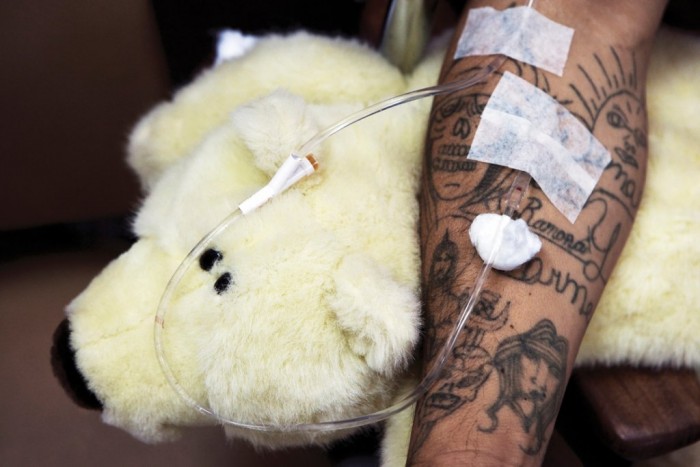
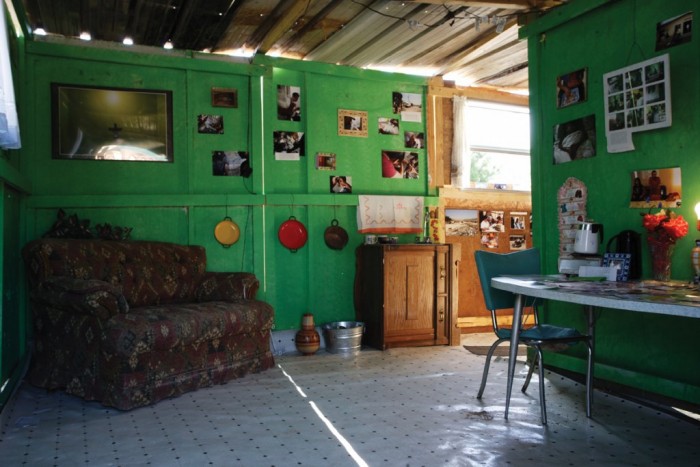
Schumann spent six months over three visits in Mexico between 2008 and 2010, on assignment for a group of Mexican NGOs led by Project Concern International and the United States and Mexico Border Health Association. To form part of a preventative campaign, these Mexican NGOs had commissioned Schumann to capture the realities and lifestyles of people living with HIV/Aids and TB, focusing on the border cities of Ciudad Juárez, Tijuana and Reynosa in Mexico, and El Paso and San Diego in the USA. The end result: The immersive Nuestra Casa photographic installation comprising the recreation of an informal house typical to the area.
The NGOs had come across Schumann’s work at the 2008 World Aids Conference in Mexico City where he had presented his installation The Shack. Commissioned by the Desmond Tutu Tuberculosis Centre in 2005, The Shack was the result of Schumann’s work documenting HIV/Aids and TB on the Cape Flats. The photographs were housed in a mobile fold-up recreation of a corrugated iron shack.
“There’s a part of me that has always felt that if I’m going to get involved in the subject matter, I have to do something about it,” Schumann says. The Shack and Nuestra Casa were motivated by the need to somehow get the decision- and policymakers into the informal settlements or, short of this, bring the settlements to their conferences, parliaments and exhibitions.
Creating a stark contrast to the illustrious surroundings of these events, the installations had a powerfully jarring effect. “When you walk into this structure, you remove yourself from your other surroundings, which forces you to engage with what is in front of you. People tend to read the stories more and pay attention to the pictures more, as opposed to just having a typical photographic exhibition on the walls in the passageways, which people will probably only glance at,” Schumann describes.
It is this power to engage that Schumann sees as the purpose of photography in social change. “Within social change, it’s got the ability to draw someone’s attention and then tell a story, and if that story is powerful enough, it can motivate that change,” he asserts.
For his collection Borderline, however, Schumann ventures beyond documentation and campaigning into the realm of art. Curating 30 images from his over 9 000 pictures taken in Mexico, Borderline shows his personal, subjective engagement with the situation. They are underscored by a question that plagued him while he was in Mexico: “What is ‘strange’ really?”
“Here I was walking around these places that seemed so strange and different to me, but I also became very conscious of the way people were looking at and responding to me with suspicion and curiosity. Suddenly I realised that the only thing that was strange in this environment was the big white South African in Central America,” Schumann laughs. Not heroin addicts, drag queens, Manga festivals or snake dancers…
This is why there are only two photographs of the actual USA-Mexican border in Borderline. “I was photographing the border between Mexico and the USA, but experiencing the border between South Africa and America,” Schumann explains that the collection is really about psychological borders.
Coming to speak more of his own practice as a photographer, Borderline is a powerful reminder of our own subjectivity and judgements when we perceive other countries, other cities and other people. “Personally I’m on this constant challenge to find the truth behind the story. This would come down to the challenging interaction of my subject matter being willing to give as much truth of themselves as they possibly can and myself, not only being able to bring that out of them, but also trying to break down my own biases and previous beliefs of what’s going on,” he concludes with a challenge.