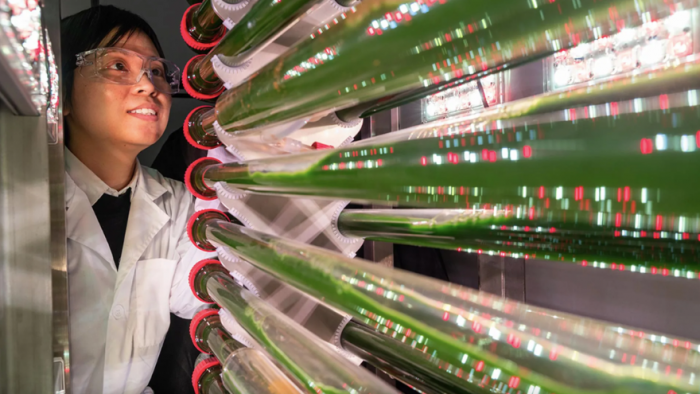
A team of researchers and scientists at the University of Missouri-Columbia, have engineered a special type of algae that offers a promising biotech based solution to growing environmental crisis of microplastic water pollution. The breakthrough positions algae as a renewable material resource for ecological remediation.
Led by chemical engineering professor Susie Dai, the team modified algae to produce limonene, a natural oil commonly found in citrus peels. The limonene changes the algae’s surface properties allowing microplastic particles to naturally bind to it forming easy-to-remove clumps. As the algae and plastics cluster together, they form heavier masses that sink and can be more easily separated from water systems.
Unlike conventional filtration systems that struggle to capture microscopic plastic particles, the algae reportedly removed more than 90% of microplastics during laboratory testing. Researchers also noted the added benefit of the algae growing in wastewater environments which absorbs excess nutrients and contribute to broader water purification processes.
The team sees potential for the technology to be integrated into municipal wastewater treatment systems, creating circular processes where captured pollutants are repurposed into safer biodegradable materials.