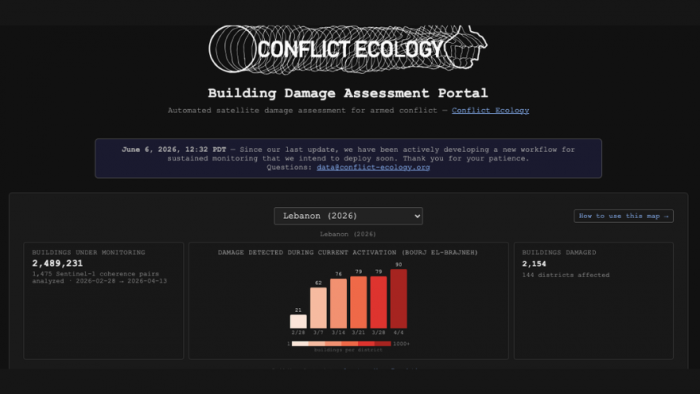
The geospatial research studio Conflict Ecology, has developed a method of using synthetic aperture radar (SAR) satellite data to identify and map damage to buildings across conflict areas such as Lebanon, creating a detailed picture of the resulting impact that might otherwise remain unseen. visual record. Unlike conventional satellite imagery, which depends on weather conditions, daylight and clear visibility, radar actively sends signals towards the Earth and measures how those signals return. By comparing changes in reflected waves over time, researchers can detect structural damage that may not yet be visible in photographic imagery.
The project highlights the growing role of design within fields traditionally associated with science and conflict analysis. Through mapping, visualisation and interface design, complex datasets become tools for public understanding. The resulting maps transform abstract statistics into spatial narratives, revealing how neighbourhoods, towns and communities are reshaped by violence. Using data gathered by the European Space Agency’s Sentinel-1 satellite constellation, Conflict Ecology analysed more than 2.4 million buildings across Lebanon, within just five weeks of renewed conflict, the team identified damage to over 2,000 structures, translating vast amounts of satellite information into an accessible and interactive visual record.
Conflict Ecology's work forms part of a broader movement that combines satellite technology, open-source intelligence and data design to document events in near real time, demonstrating how remote sensing technologies are becoming critical instruments of accountability. While maps cannot capture the human cost of war, they can provide an independent record of what has happened on the ground. In doing so, they demonstrate how design can function as a tool for documentation, transparency and justice.