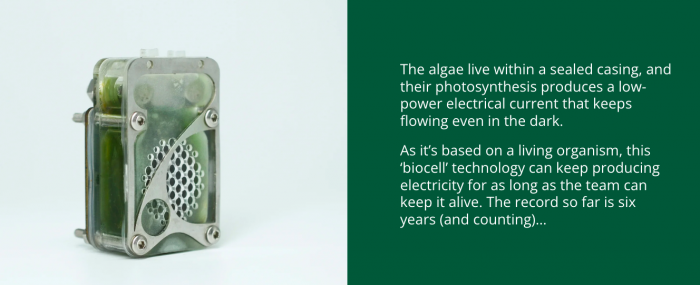
Researchers at the University of Cambridge have developed a living bio-cell that generates electricity using photosynthetic cyanobacteria, commonly known as blue-green algae. Unlike conventional batteries that store a finite amount of energy, the system continuously produces a low electrical current by harnessing the natural flow of electrons created during photosynthesis by day and respiration at night. As long as the organisms remain alive, the device keeps generating power. While the technology isn't intended to replace high-capacity lithium batteries, it could provide a sustainable alternative for millions of low-power devices.
Made from inexpensive, largely recyclable materials, the biocells could significantly reduce battery waste while extending the lifespan of connected devices. An interdisciplinary team at the university comprising of biochemists, engineers and bio-designer Lucia Giron have worked together to develop practical prototypes that demonstrate how living energy systems could integrate into everyday life. The University of Cambridge's living bio-cell aims to offer an alternative to traditional batteries that are renewable, low-maintenance and made from inexpensive, recyclable materials.