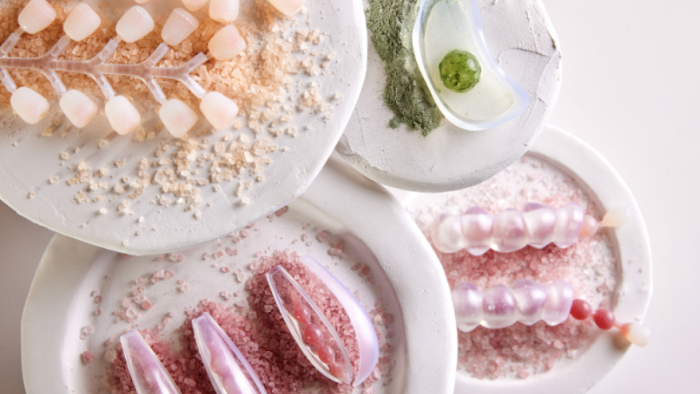



Studio Malu, led by Malu Luecking, has developed a speculative project ‘Landless Food’ to explore systems of cultivation that are untethered from traditional farmland to preserve traditional foods and flavours in that are becoming increasingly threatened by rising sea levels, migration, climate instability and urban density. Landless Food proposes a regeneration of humanity’s food system through the introduction of a new family of flavours designed to reconnect people with disappearing culinary memories. These flavours are derived from microalgae, which has become a major focus of scientific research due to its diverse taste potential and ability to be refined through metabolic manipulation. The project’s first outcomes include a line of seafood-inspired flavours and a floral spice.
“We are in the year 2050. Agriculture, as we used to know it, barely exists anymore.” This is the unsettling premise behind Landless Food. The project imagines a world where biodiversity has been devastated by consumerism and climate change. Overfishing has depleted marine ecosystems, while the extinction of bees has erased countless flowering plants and herbs, dramatically reducing the spectrum of natural flavours available to humanity. Beyond threatening food security, the loss of agro-biodiversity also erodes the cultural rituals, spirituality and collective histories embedded in culinary traditions.
Landless Food proposes a regeneration of humanity’s food system through the introduction of a new family of flavours designed to reconnect people with disappearing culinary memories. These flavours are derived from microalgae, which has become a major focus of scientific research due to its diverse taste potential and ability to be refined through metabolic manipulation. The project’s first outcomes include a line of seafood-inspired flavours and a floral spice.
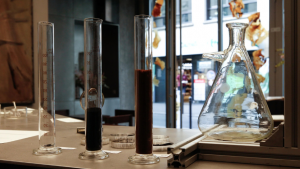
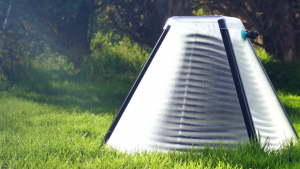
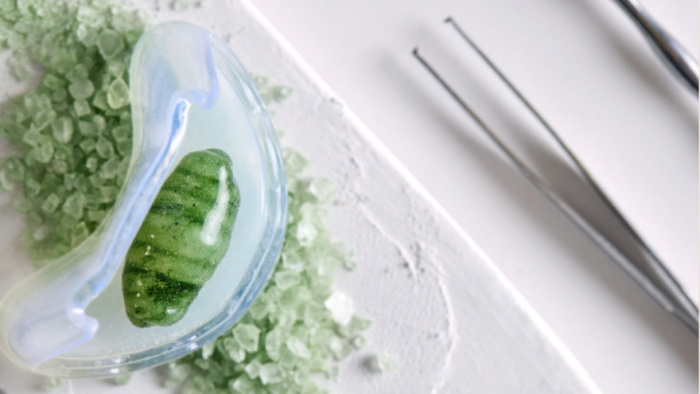
To create these speculative foods, local strains of microalgae are cultivated on edible gel-like objects. After two weeks, the algae can be harvested and consumed fresh. For the project Studio Malu presents six food objects as reincarnations of three lost flavour profiles. While the forms of the food appear unfamiliar and futuristic, the tools designed to consume them reference the long-extinct resources from which the tastes originate. By combining research, storytelling and speculative design, Studio Malu encourages us to rethink food as cultural preservation.