Can nature be prescribed? Portugal’s first certified Therapeutic forest aims to explore the nature as a national infrastructure for Heath. Mata Nacional do Bussaco, on the Iberian Peninsula, has officially joined a group of only four internationally certified therapeutic forests worldwide. The designation marks a growing recognition that landscapes can be intentionally designed to improve human wellbeing. During an era in which communities are confronting rising rates of anxiety, burnout and loneliness, the certification invites a broader design question, what if a city’s natural infrastructure can be designed for wellbeing, healing and restoration.
Unlike a protected forest or national park, a therapeutic forest is not simply a beautiful natural environment.
Certification recognises landscapes that have been deliberately planned to support guided therapeutic programmes. The forest's pathways, gradients, acoustic qualities, vegetation density, sheltered spaces and opportunities for sensory immersion are evaluated for their ability to facilitate physical and psychological restoration. Qualified forest therapists then use these environments as part of structured treatment programmes that complement conventional healthcare. The therapeutic value lies not only in the forest itself, but in the design of experiences and the facilitation of healing modalities intertwined with nature.
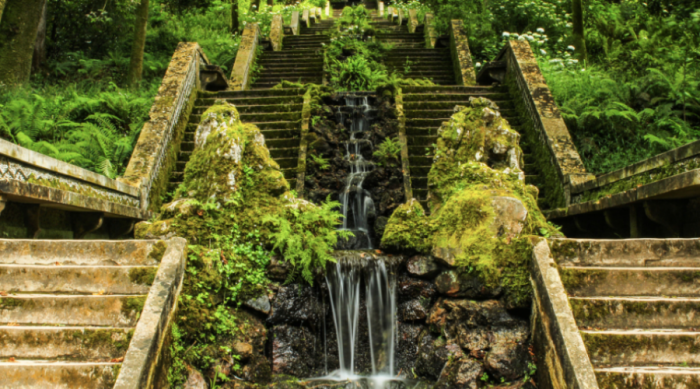
Located in the municipality of Mealhada, roughly two hours north of Lisbon, Bussaco is already regarded as one of Europe's most remarkable botanical locations. Spread across approximately 105 hectares, the forest contains around 250 species of trees from across the world over several centuries. Ancient cedars, towering sequoias, exotic cypresses and native Portuguese woodland coexist alongside monasteries, gardens and historic pathways, creating an unusually diverse ecological and cultural landscape.
Research over the past decade has increasingly associated regular exposure to biodiverse natural environments with lower stress hormones, improved immune function, better sleep quality and enhanced emotional wellbeing, helping shift nature from an aesthetic luxury to an evidence-informed health resource. Changing light conditions, varied textures underfoot, natural sounds and layered vegetation all contribute to sensory experiences shown to reduce stress and improve cognitive restoration. The certification acknowledges that biodiversity itself can become part of a therapeutic practices.