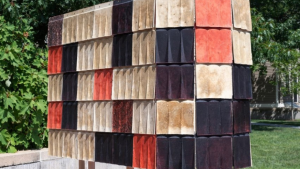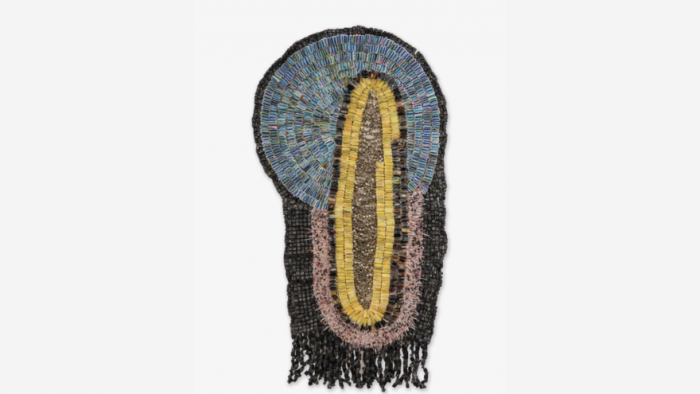
Zimbabwean artist Moffat Takadiwa is turning discarded plastic into artistic tapestries designed to become a record of extraction. Takadiwa gathers plastic consumer waste from recycling centres and dumping sites across Harare, meticulously sorted by colours and textures and then arranged and drilled into a woven-like artwork that blur the boundaries between tapestry and sculpture.
At first glance, the undulating surfaces resemble richly textured textiles and at a closer look reveals thousands of individual plastic components, each carrying traces of global trade, consumption and disposal. The artist’s practice is deeply rooted in Zimbabwe’s social and economic realities. Based in Mbare, one of Harare’s largest recycling hubs, Takadiwa works with materials that reflect the flow of imported goods and the environmental consequences they leave behind. His compositions draw attention to the enduring effects of colonial extraction and unequal global trade systems, revealing how the residues of consumer culture continue to shape African landscapes.
Many of the works incorporate computer keyboard keys, a recurring material in Takadiwa’s practice. Arranged into dense topographies and flowing patterns, the keys become fragmented alphabets that explore themes of language, identity and cultural memory. Other works feature beauty products, toothbrushes and household objects, connecting personal rituals to broader questions of consumption and value. Despite their critique of environmental degradation and economic imbalance, the works are ultimately acts of repair. The painstaking process of collecting, sorting and weaving transforms discarded objects into forms of extraordinary beauty. Craft becomes a tool for slowing down systems built on extraction and disposability. Takadiwa, through his art offers an alternative narrative to waste, one in which discarded materials are not the end of a story, but the beginning of a new one.