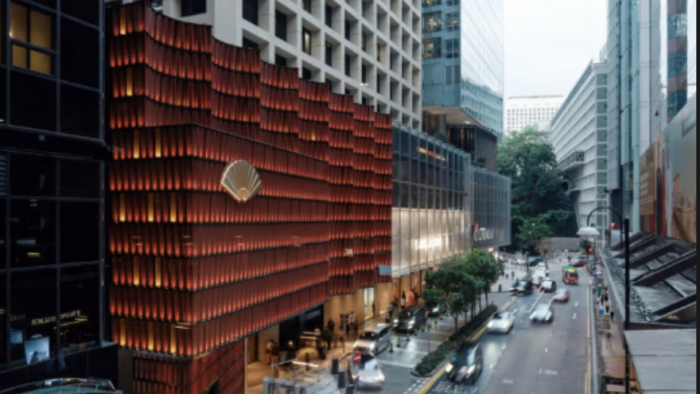

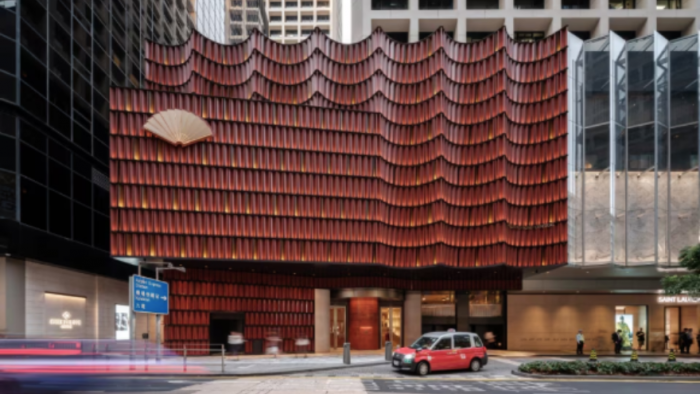
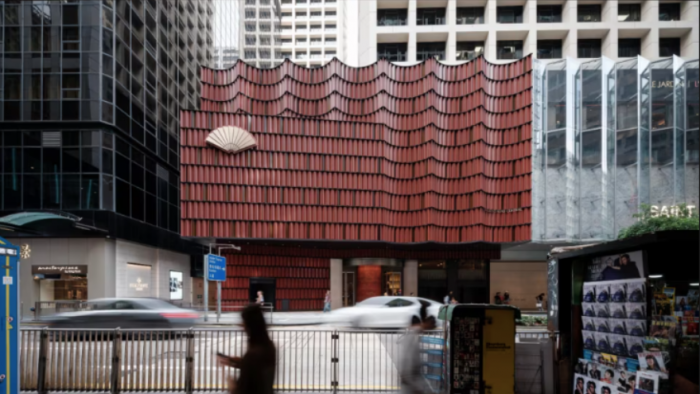
In Hong Kong's financial district, where modernist architecture dominates the skyline, Shanghai-based architecture practice Neri&Hu has reimagined the façade of the Mandarin Oriental, The Landmark, replacing its modernist exterior with a richly textured terracotta façade that introduces warmth, depth and a distinctly handcrafted presence to the cityscape. In contrast to the glass and steel, Neri&Hu looked to one of the country’s oldest building materials.
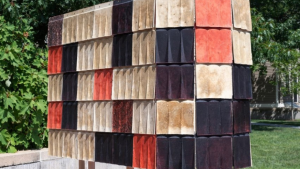
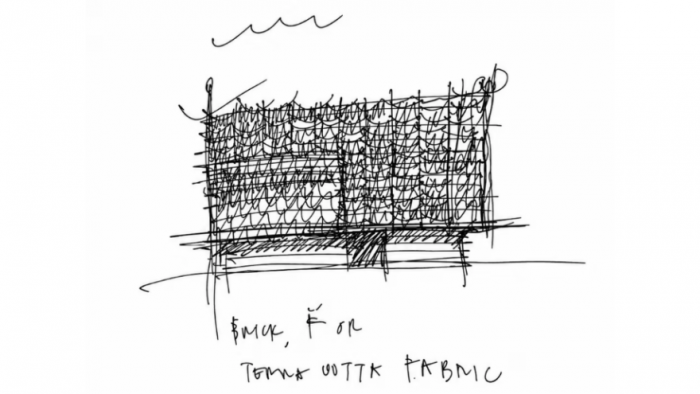
Composed of thousands of handcrafted terracotta modules, the new façade wraps the building in a woven lattice that recalls traditional textile-making, bamboo craftsmanship and basket weaving, artisanal practices deeply embedded across Asia's cultural history. The interlocking geometry creates a layered architectural skin that filters light, casts shifting shadows and gives the building an ever-changing appearance throughout the day.
The redevelopment forms part of the hotel's broader transformation while preserving its long-standing presence within Hong Kong Land's Landmark precinct in Central.Neri&Hu reimagines the building’s façade as a mediating layer between the building and the city. The project continues the studio's reputation for architecture that is deeply contextual rather than stylistically uniform. The woven composition reflects the language of making into the architecture. Like woven fabric, each terracotta element is modest on its own, but collectively forms a distinctive surface. In a city defined by speed, density and technological progression, the renewed Mandarin Oriental encourages passers-by to pause and engage with its surface. It is a reminder that architecture can do more than shape skylines, it can preserve cultural memory, celebrate craftsmanship and weave heritage into the fabric of the contemporary city. Neri&Hu responds to place, culture and history aiming to create buildings that reveal new layers of meaning over time.