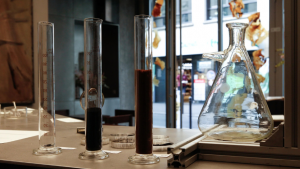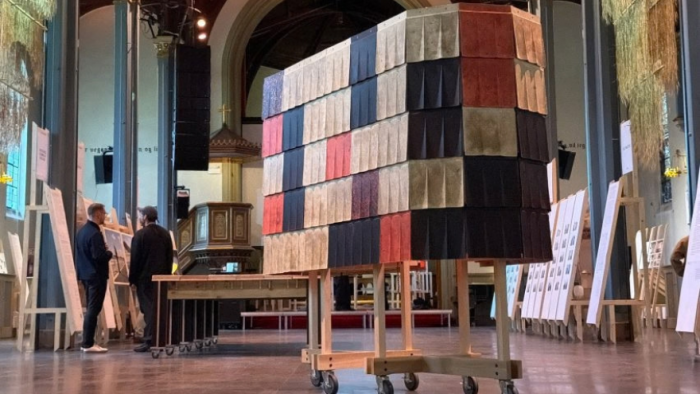
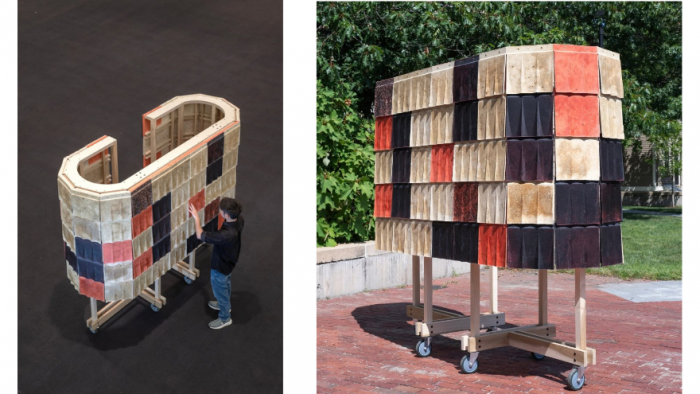
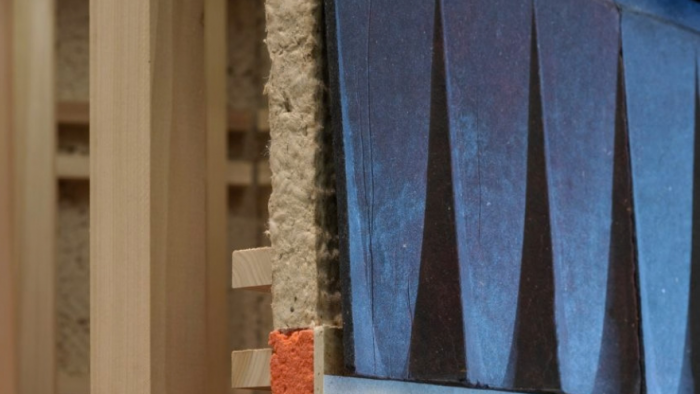

Exhibiting at the 2026 Oslo Architecture Triennale, Harvard University’s Grinham Research Group’s Upcycling Wool Ecologies, presents an alternative to conventional insulation and façade materials, while addressing the growing volume of agricultural and textile waste and the environmental cost of building construction. The project showcase a new material made by processing waste wool fibres with an alkaline solution before using citric acid and heat to bind them into a rigid composite.The process avoids petrochemical resins, allowing the natural properties of wool, including its insulation and fire resistance, to become central to the material's performance. The resulting tiles have a distinctive fluted surface, giving the cladding a tactile architectural expression.
Wool, typically associated with clothing, craft and rural economies, is repositioned as an architectural material capable of contributing to the performance of buildings. With around one billion kilograms of wool produced globally each year, the project turns wool waste into functioning, aesthetically unique construction material. Upcycling Wool Ecologies offers another proposition: perhaps the future of building lies not in making more, but in finding new architectural value in what we already have.