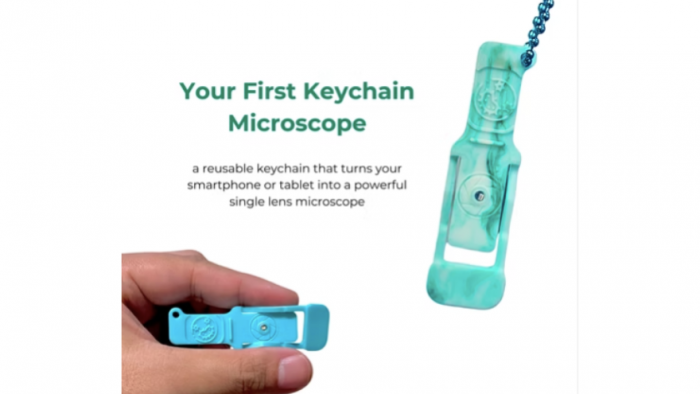
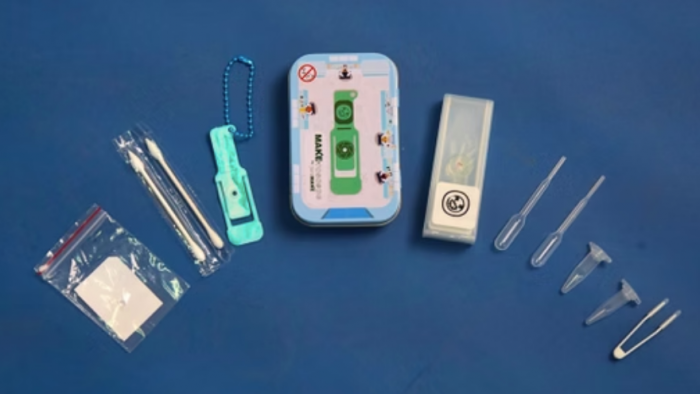
The Make-roscope is a keychain-sized microscope developed by Filipino engineer Jeremy De Leon, designed to transform smartphones into accessible scientific tools. Recognised by the James Dyson Award, the device is a design response to the global lack of access to laboratory equipment.
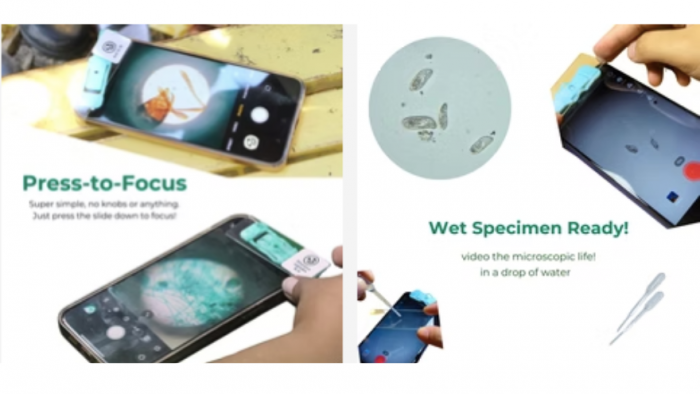
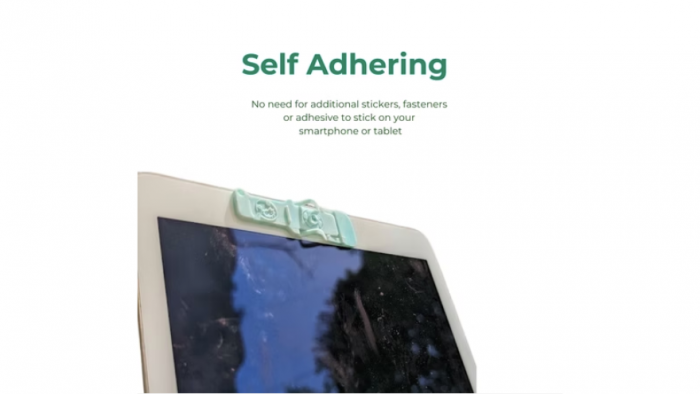
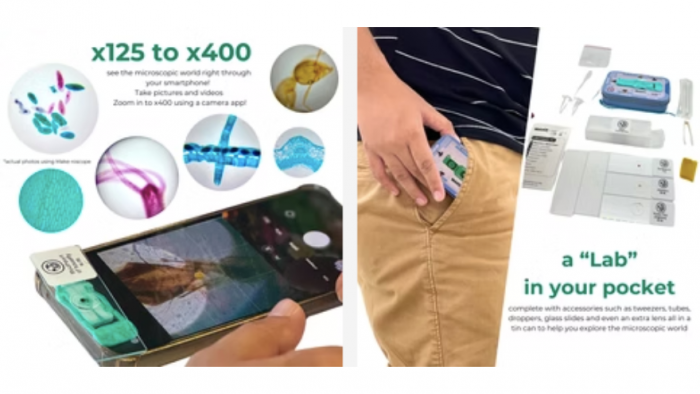
The project emerged from the reality that millions of students particularly in underserved and remote communities have limited access to hands-on science education. By leveraging the ubiquity of smartphones, the Make-roscope takes the form of a flexible silicone strip embedded with a single lens that attaches directly to a device’s camera, enabling magnification of up to 400x.
Compact enough to fit on a keychain, it eliminates the need for bulky, expensive lab equipment, allowing students to explore microscopic environments anywhere from classrooms to outdoor settings. Its affordability and portability make it an accessible tool for experimentation and observation, freeing users from the constraints of traditional microscopy.
Supported by the Department of Science and Technology Technology Application and Promotion Institute, the Make-roscope has been distributed to thousands of students and educators across the Philippines, significantly expanding access to hands-on learning.