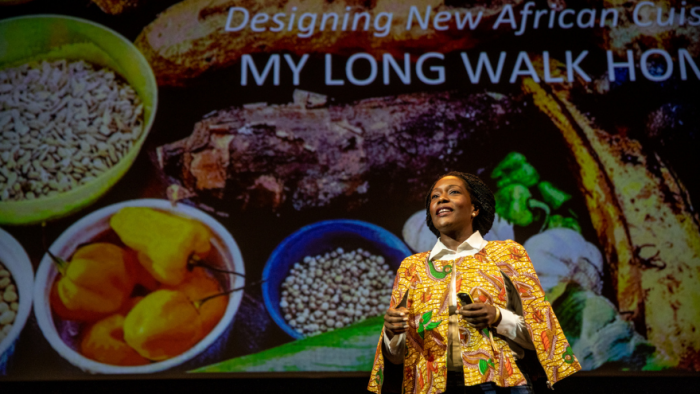

At the 25th edition of Design Indaba Conference, Ghanaian chef Selassie Atadika delivered a powerful talk expressing culinary arts and food as a form of design, cultural preservation and political agency. Inspired by her past experience in international affairs which led to her work at UNICEF, she propositioned that what societies eat shapes health systems, economies and environmental outcomes making cuisine a critical but often overlooked infrastructure.
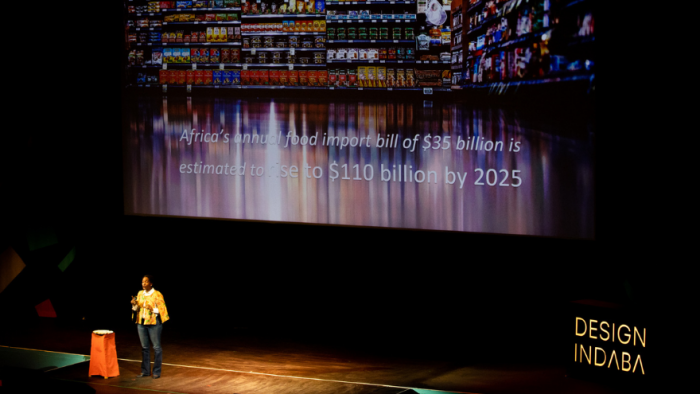
Atadika draws attention to Africa’s heavy reliance on imported staples, a dependency that undermines local agriculture and food sovereignty. The chef advocates for a renewed investment in indigenous crops and traditional knowledge, noting that many African food practices which include plant-based ingredients zero-waste cooking, fermentation and the use of climate-resilient grains predate contemporary global wellness trends.
Central to Chef Atadika’s message is concern over the rapid loss of culinary heritage due to urbanisation, industrial agriculture and generational disconnect. The erosion, she argued, threatens biodiversity, nutrition and Africa’s cultural identities. However, rather than advocating nostalgia, Atadika proposes a new paradigm “New African Cuisine”, a concept that evolves while remaining rooted in indigenous knowledge. In a multisensory element of her talk, she embodied this concept by taking audience members through a tasting journey of African ingredients.
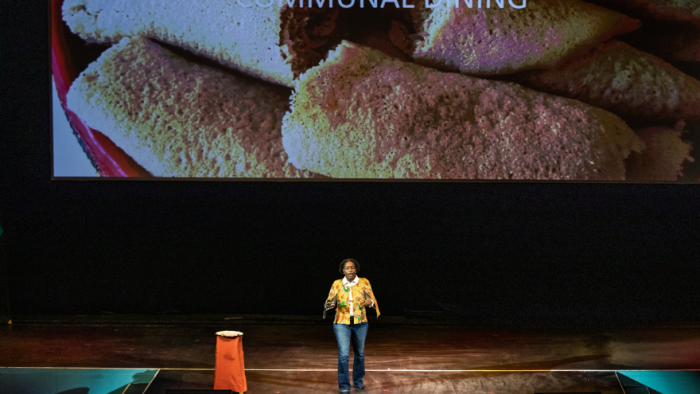
Atadika’s talk expresses how food can be used as a connection between people to their land, history and one community, as well as a pathway toward a sustainable African future rooted in dignity, resilience, and self-determination across the continent.
Watch the full Design Indaba talk here.