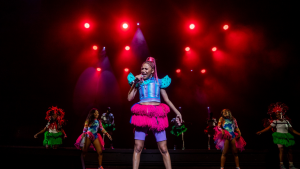
Nhlanhla Mahlangu, a vocalist, dancer, and theatre-maker, whose work is rooted in what he describes as a “chanting biography”, a method of storytelling that uses the body, voice and rhythm to carry memory, took to the Design Indaba stage to deliver a deeply embodied embodied performance that was part art, history and research.
Born in Phola Park during apartheid, Mahlangu’s personal history is inseparable from his practice. His performance traced how lived experience, from political violence to cultural displacement, informs a body of work that confronts South Africa’s past while imagining paths toward healing.
Central to his practice is isicathamiya, a traditional Zulu singing form often associated with migrant labour communities. Mahlangu reinterpreted this genre through contemporary theatre, layering it with movement, protest traditions like toyi-toyi and experimental staging. The result is a richly choreographed performance that transforms the body into an archive capable of holding history, processing trauma and reimagining identity in a fractured world.